
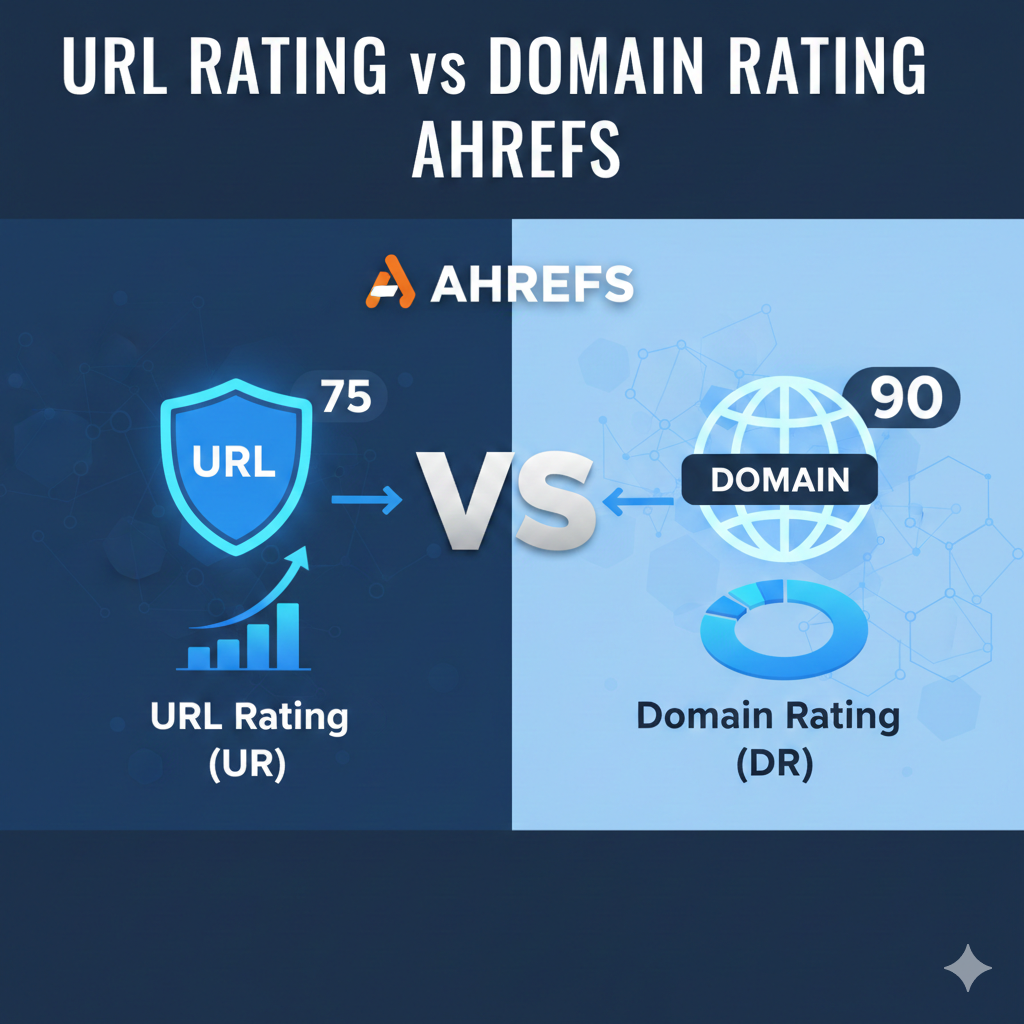
If you use Ahrefs for SEO, you have probably seen two important numbers called URL Rating and Domain Rating. Many beginners get confused about what these numbers mean and how to use them when building links or checking website strength.
In this guide, we will explain URL Rating vs Domain Rating in simple words so you can make better SEO decisions using Ahrefs metrics.
What Is URL Rating in Ahrefs
URL Rating, also called UR, shows how strong a single page is based on its backlinks. It is measured on a scale from 0 to 100. The higher the number, the more powerful that page is.
URL Rating focuses only on one page, not the whole website. This means two pages on the same website can have very different UR scores.
For example, a homepage may have a UR of 70, while a blog post on the same site may have a UR of 20. This happens because more websites link to the homepage than to the blog post.
If you are trying to rank one specific page, URL Rating is the metric that matters most.
What Is Domain Rating in Ahrefs
Domain Rating, or DR, measures the strength of an entire website based on its backlink profile. It also uses a scale from 0 to 100.
Domain Rating is based on:
- How many websites link to the domain
- How strong those linking websites are
- How many other sites those domains link to
DR tells you how powerful a website is in general. It does not tell you how strong one specific page is.
A site with high DR is usually trusted by search engines, but not every page on that site is equally powerful.
The Main Difference Between URL Rating and Domain Rating
The biggest difference between UR and DR is what they measure.
URL Rating measures one page.
Domain Rating measures the whole website.
This means you could get a backlink from a website with high DR, but if the page linking to you has low UR, the link might not be very strong.
For link building, URL Rating often matters more than Domain Rating because links come from pages, not domains.
How Ahrefs Metrics Affect Link Building
When people look for backlink opportunities, they often focus only on Domain Rating. This is a mistake.
A backlink from a page with high URL Rating can be more valuable than a backlink from a weak page on a high DR website.
Here is how you should use Ahrefs metrics when choosing backlinks:
- Check the DR to see if the website is trustworthy
- Check the UR to see if the linking page is powerful
- Make sure the page is relevant to your topic
This way, you avoid low quality links and get real SEO value.
When URL Rating Is More Important
URL Rating is more important when:
- You are trying to rank a specific page
- You are building backlinks to one blog post
- You want strong link juice from a page
A page with high UR passes more ranking power to your website.
This is why smart SEOs always check the URL Rating before accepting a backlink.
When Domain Rating Is More Important
Domain Rating is more important when:
- You want long term trust
- You are checking if a site is spammy
- You are comparing websites
High DR usually means the site has a strong backlink profile and good authority in its niche.
However, DR alone should never be the only factor you look at.
How to Use Ahrefs Metrics the Right Way
The best SEO strategy is to use both URL Rating and Domain Rating together.
First, check the DR to see if the website is strong.
Then, check the UR of the page that will link to you.
If both are good and the content is relevant, you have found a strong backlink opportunity.
This balanced approach helps you avoid low value links and focus on quality.
Final Thoughts
Understanding URL Rating vs Domain Rating helps you make smarter SEO decisions. These Ahrefs metrics are powerful tools, but only when used correctly.
Instead of chasing high DR websites blindly, focus on strong pages with high URL Rating. This will help your pages rank faster and more consistently in search engines.