
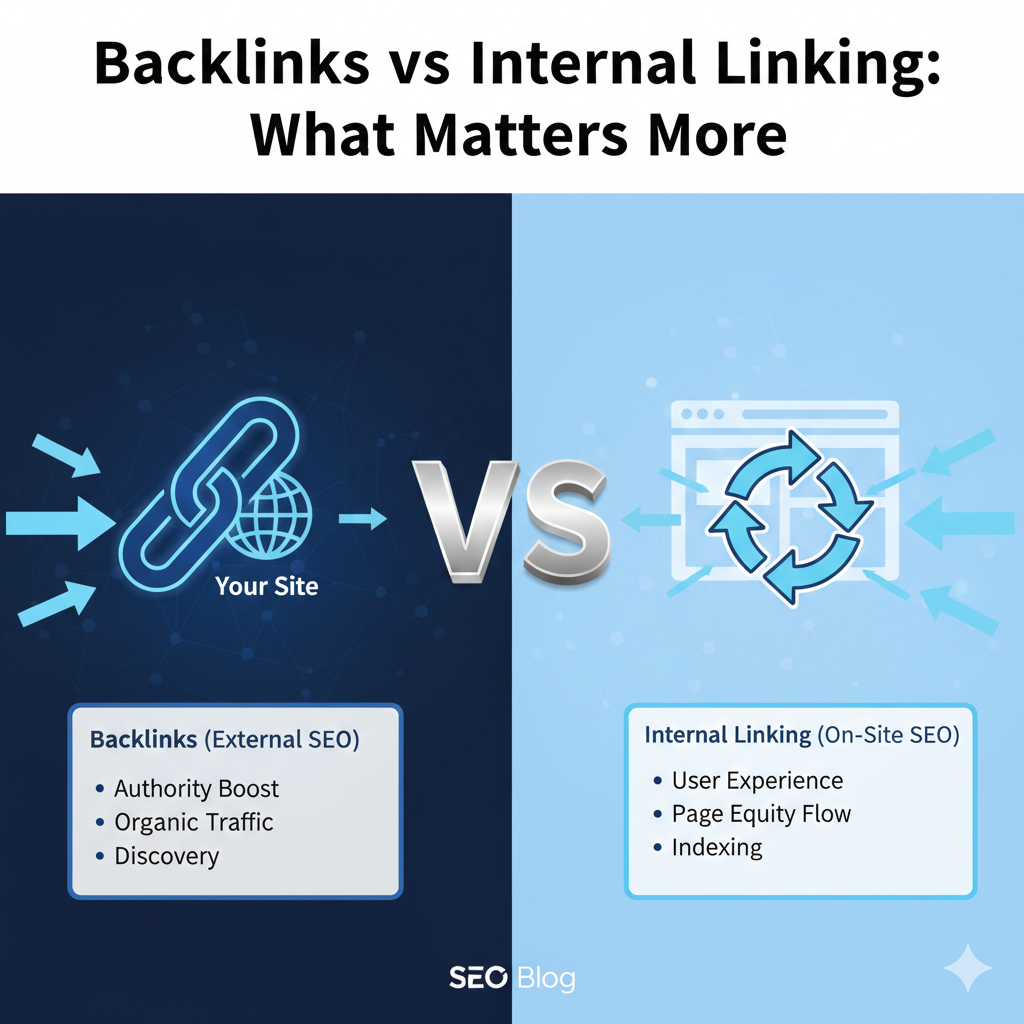
When people start learning SEO, they often hear one common thing: build backlinks. While backlinks are important, many beginners ignore internal linking completely. This creates confusion about what actually matters more for ranking.
The truth is, both backlinks and internal linking play different roles in SEO. You cannot rely on only one if you want long term growth. In this article, we will break down internal linking vs backlinks in simple words so you understand where to focus and why.
What Are Backlinks and Why They Matter
Backlinks are links that come from other websites to your website. Search engines see backlinks as a vote of trust. When a good website links to you, it signals that your content is useful and reliable.
Backlinks help with:
- Increasing website authority
- Improving search rankings
- Bringing referral traffic
- Building trust with search engines
Not all backlinks are equal. One relevant backlink from a trusted site is better than many low quality links. This is why quality always matters more than quantity.
Without backlinks, it is very hard for new websites to compete in search results, especially in competitive niches.
What Is Internal Linking and Why It Matters
Internal linking means linking one page of your website to another page on the same website. These links help search engines understand your site structure and content relationship.
Internal linking helps with:
- Better crawling and indexing
- Passing link value between pages
- Improving user experience
- Helping pages rank faster
When you internally link important pages, you tell search engines which content matters most. This makes your site more organized and easier to understand.
Many websites have good content but poor rankings simply because they do not use internal links properly.
Key Differences Between Backlinks and Internal Linking
The biggest difference between backlinks and internal links is where they come from.
Backlinks come from other websites.
Internal links stay inside your website.
Backlinks build authority from outside sources.
Internal links distribute authority within your site.
Backlinks are harder to get and take time.
Internal links are fully under your control.
This is why internal linking is often ignored, even though it is one of the easiest SEO improvements you can make.
Which One Matters More for SEO
There is no single winner in internal linking vs backlinks. They work best together.
Backlinks help your website gain trust and authority.
Internal links help spread that authority to important pages.
If you only build backlinks but do not use internal linking, the power of those links is wasted. If you only use internal links but have no backlinks, your site lacks authority.
For new websites, internal linking is extremely important because it helps search engines understand your site faster. For established websites, backlinks play a bigger role in competing for high rankings.
How to Use Both the Right Way
The smartest SEO strategy is to balance both.
First, create high quality content that deserves links.
Second, build backlinks to important pages.
Third, use internal links to support those pages.
Best practices include:
- Linking related blog posts together
- Using natural anchor text
- Linking from high traffic pages to important pages
- Avoiding too many links on one page
When done correctly, internal linking boosts the value of your backlinks and improves overall rankings.
Common Mistakes to Avoid
Many people make simple mistakes that hurt SEO results.
Common backlink mistakes:
- Buying low quality links
- Ignoring relevance
- Overusing exact match anchor text
Common internal linking mistakes:
- Not linking important pages
- Using the same anchor text everywhere
- Forgetting old content
Avoiding these mistakes helps you build a strong and natural SEO foundation.
Final Thoughts
Backlinks vs internal linking is not a competition. Both are essential parts of SEO. Backlinks bring authority from outside, while internal links help you control how that authority flows inside your website.
If you want stable rankings and long term growth, focus on building quality backlinks and smart internal linking together. This balanced approach always delivers better results.